
Welcome to the third part of our Scheepjes LANDSCAPES MAL. So much inspiration and creativity can be found in the official Facebook groups and I follow your individual progress with great joy. I read your stories and get inspired by the way you adapt your very own Landscape version. If you are not part of the Facebook groups yet, you can find them here:
Official SCHEEPJES International Group – Facebook
The Landscape Shawl on Ravelry
You can find your owncolorway and buy your yarn at the local yarn shop: Scheepjes Dealers . If you do not have the possibility to buy local, you can order your Scheepjes yarn at Wool Warehouse or Jimmy Beans Wool
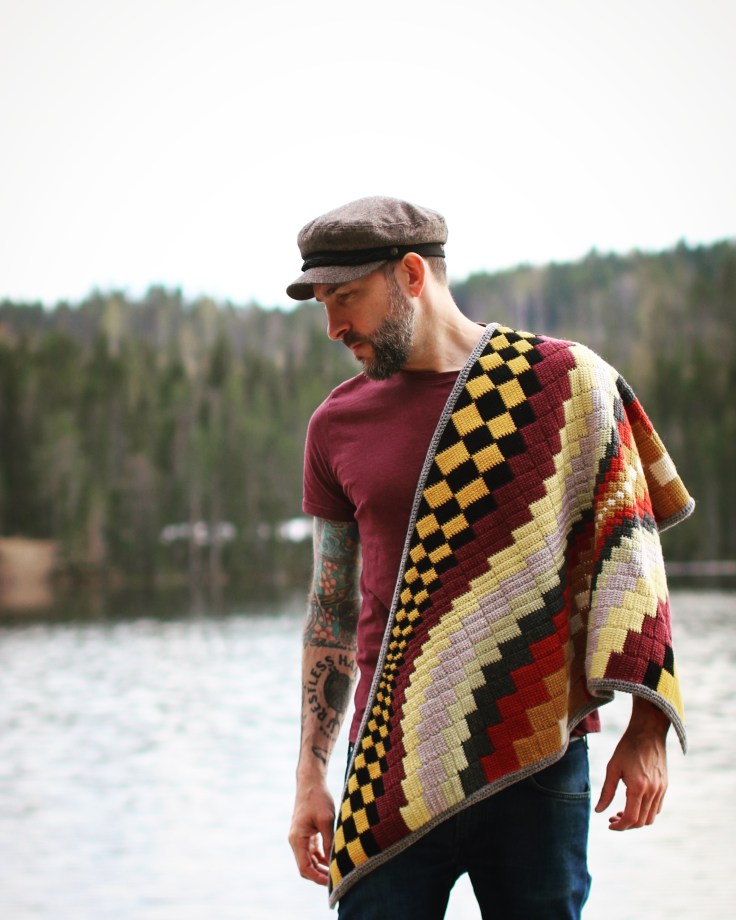
As some of us are really fast with this pattern I thought it would be a good idea to take a closer look at how to finish the shawl and add a border. You will find every information you need in the pattern but there are still a few options that are not part of the pattern that can be worth a consideration.
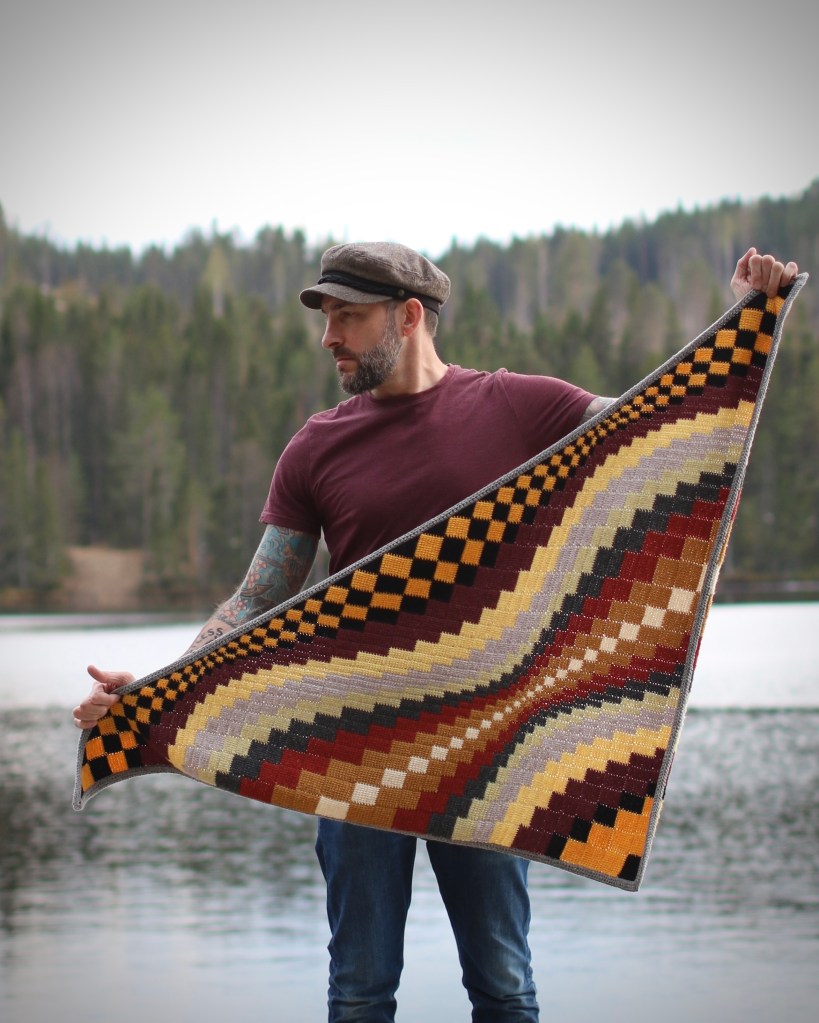
The Last Row
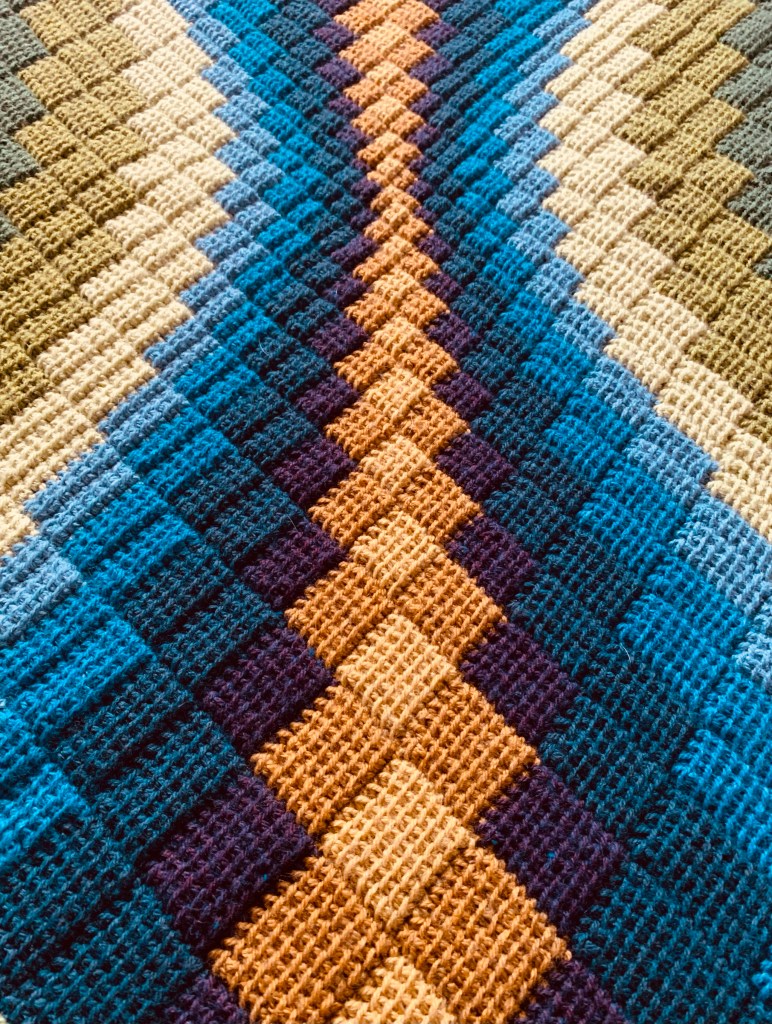
The last Entrelac row is made of triangles to give the shawl a straight edge. In general I recommend to adapt and change all of my patterns to your very own needs and wants. So feel free to do what ever you want. You can finish your shawl whenever you want. You can make your shawl bigger or smaller but if you want to finish with a line of even triangles you need to understand the repeats of the pattern.
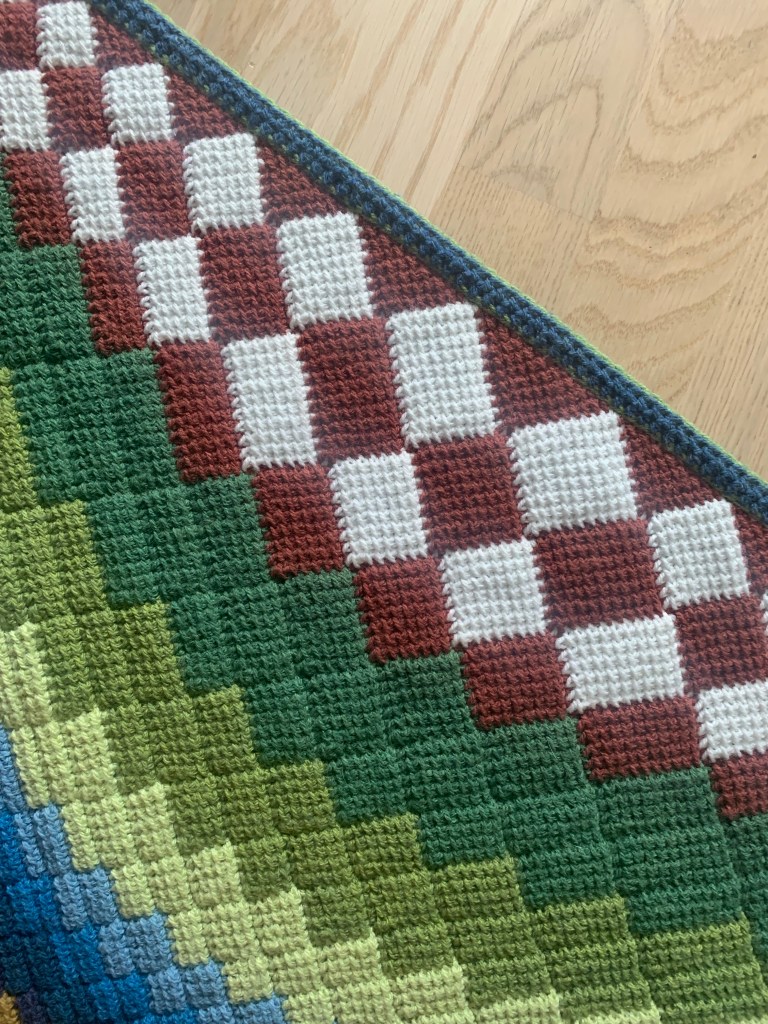
Basically even triangles can be made in rows that consist of squares and those rows are: 23, 45, 67 and so on. (Every 22nd row, if you follow the stitch count of the pattern). So if you choose to add rows to the shawl, be prepared that you need to add 22 rows to reach the next row that can be finished in perfect squares.
To have a Kintsugi mindset.
The edges of Tunisian crochet curl. Sometimes more, sometimes less and we can prevent a lot of curling by wet blocking and choosing the right hook size…. but it still might curl.
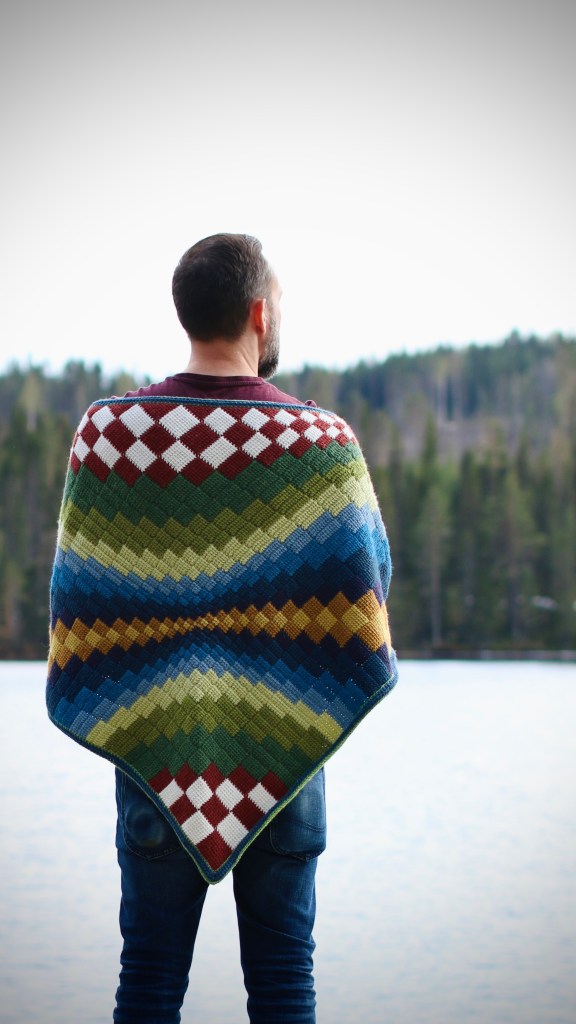
The double border that is included in the pattern gives the short sides of the Landscape shawl some strength to prevent curling too. But it still might curl a bit. So what to do?
There is a Japanese art called “Kintsugi” that involves repairing broken pottery using lacquer dusted with gold, silver or platinum. The lacquer draws attention to the repairs instead of hiding them. The art is influenced by the ideas in Japanese philosophy such as seeing beauty in imperfection and the acceptance of change.
Learn more about Kintsugi: https://www.yukogunji.com/
I am very far from being an expert in philosophy, Japanese culture or pottery. All I know about Kintsugi or Kintsukuroi are in fact memes from the internet which I found without any source criticism what so ever.
But hey… I still like the idea and the attitude. I even try to use this mindset in at my daily work as a social worker and so a decision was made to use the curling edges as an advantage and add a two color border that highlights the curling instead of hiding it.
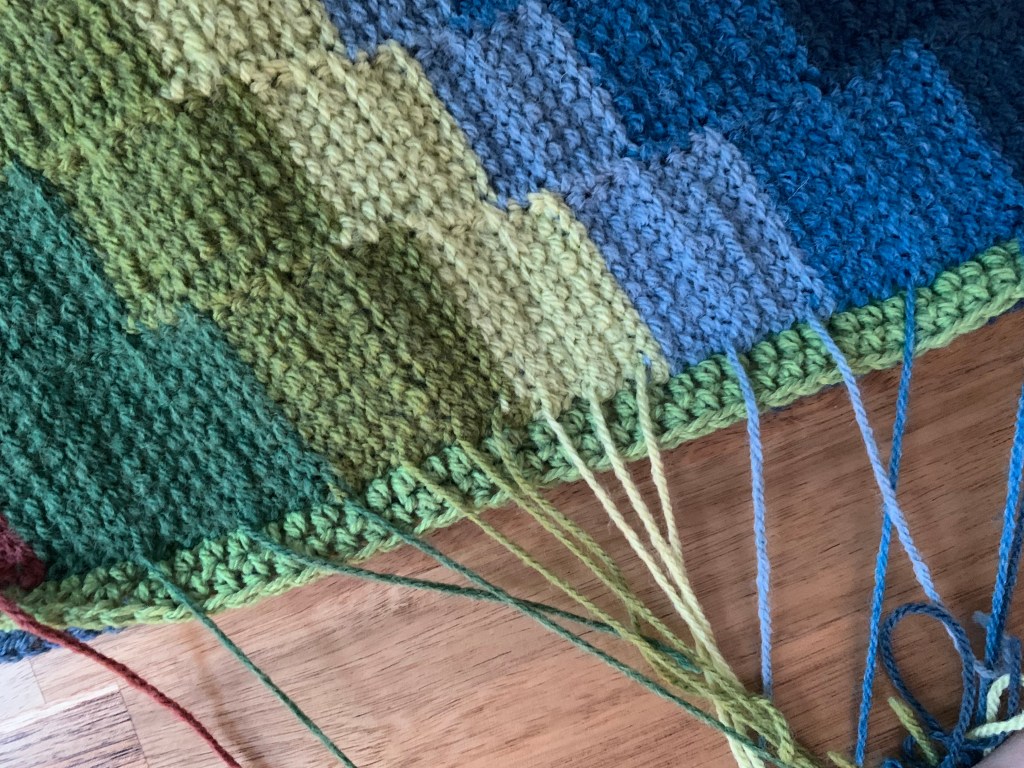
The double border is also used to hide the loose ends so you skip the joy of weaving in ends.
(If you did weave as you go for a few stitches so your ends will end up outside the double border and needs to be weaved into the double border in the end) 🙂
As the great Leonard Cohen says in his song Anthem:
“There is a crack, a crack in everything
That’s how the light gets in”
Hope you enjoy our Scheepjes LANDSCAPES Make-a-Long as much as i do.
The official hashtags for this MAL are: #ScheepjesMAL #LandscapesMAL #ScheepjesScrumptious #ScheepjesMetropolis don´t forget to use them when sharing your projets in social media or simply tag @martin_up_north on your social media. More to come soon from up NORTH.
 Martin Up North
I have just reached the triangle row, but do not understand the printed instructions. Is there a video showing how to crochet this triangle row?
Thank you for your help
Annemarie in Husum, Germany
LikeLiked by 1 person